
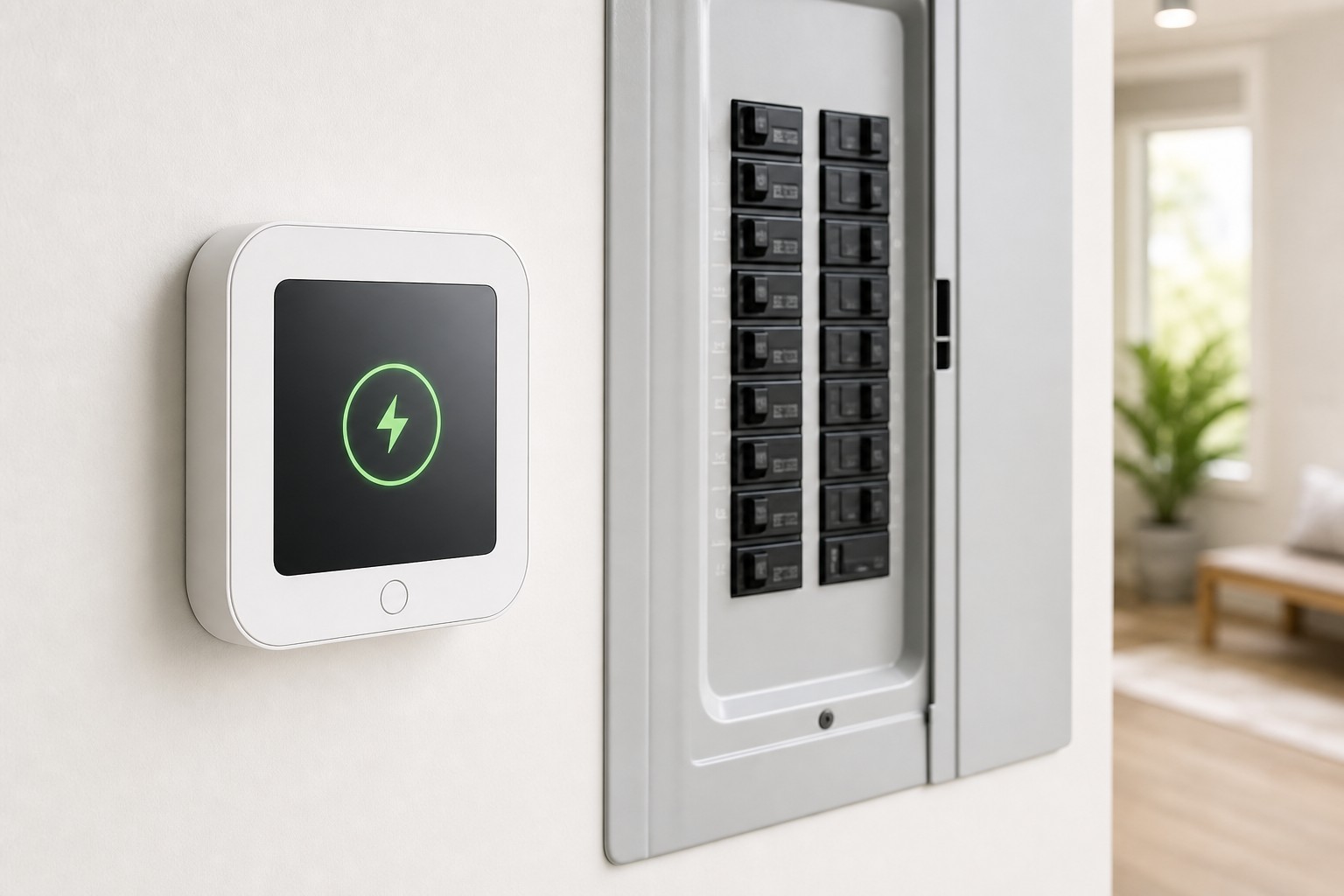
Most homeowners have only a vague sense of where their electricity actually goes beyond a single monthly total on a utility bill. Whole-home energy monitoring breaks that total down by circuit or device, and becomes considerably more valuable once a home has solar, battery, and EV charging all interacting with each other.
Circuit-Level vs. Whole-Panel Monitoring
Basic monitoring measures total home consumption at the main panel — useful for tracking overall usage trends but not for identifying which specific circuit or appliance is driving cost. Circuit-level monitoring (measuring individual breakers) identifies exactly which loads — HVAC, water heater, EV charger, pool pump — are actually contributing most to the bill, which is where the more useful and actionable insight comes from.
Why This Matters More With Solar and Battery
Once a home has solar production, battery storage, and possibly EV charging, the simple question of "how much electricity am I using" becomes "how much is coming from solar, how much from battery, how much from the grid, and where is it actually going" — a genuinely more complex picture that a proper monitoring system is built to visualize, and that a basic utility bill can't answer at all.
Identifying Unexpected Usage
Circuit-level monitoring is one of the more effective ways to catch a failing appliance or a system running longer than it should — a pool pump running far more hours than programmed, an aging AC unit drawing meaningfully more power than it used to, or a water heater cycling unusually often — often before the issue becomes an expensive repair or a surprising utility bill.
Load Management and Smart Scheduling
Some energy monitoring systems go beyond visibility and actively manage load — automatically shifting EV charging or other flexible loads to off-peak hours or times of high solar production, maximizing self-consumption of solar generation rather than exporting excess to the grid and buying it back later (a meaningful distinction under some net metering arrangements).
Integration With Smart Home Platforms
Energy monitoring data increasingly integrates with broader smart home platforms, allowing usage data to inform automations — for example, delaying a high-draw appliance cycle during a period of high grid demand or limited battery reserve, coordinated with the rest of a home's automation rather than as an isolated monitoring dashboard.
The Bottom Line
Energy monitoring is most valuable specifically once a home has multiple interacting energy systems (solar, battery, EV charging) where a simple monthly utility total no longer tells the full story — circuit-level visibility is what actually lets a homeowner understand and optimize how those systems work together.